
Clayton County Busted Mugshots Explained
A Clayton County booking begins the moment an agency delivers someone to the jail. Locals know the place as the Harold R. Banke Justice Center, and the Sheriff's Office logs each admission there. The docket row picks up a number, a timestamp, the arresting agency, and the charge as entered that day. A booking photo is often taken for identification, though the public docket does not currently show one.
Searchers use the word "busted" constantly. It is casual shorthand, nothing more. For anything that happens after booking, such as filings, pleas, sentences, or sealing orders, the court docket is the record that counts.
- Booking
- The jail's intake process, including identity checks, charges as entered, bond information, and custody status.
- Bond
- A release condition or amount shown by the jail system. It is not a sentence and does not decide the case.
- Disposition
- The court's later resolution, such as dismissal, plea, verdict, sentence, or another final order.
- Record restriction
- A Georgia process that limits public criminal-history dissemination in eligible cases. It does not mean every copy on the internet vanishes.
Clayton County Booking Record Fields
Clayton County gives you two views of a booking. The short list is fine for spotting an admission. Click a docket number and the detail view opens up with the law-enforcement number, the arresting agency, physical descriptors, name-type data, numbered charges, and bond details. What you will not find there is a court date, a courtroom assignment, a final outcome, or a photograph. That gap matters. Common names get confused fast, and a jail row was never built to answer questions a judge decides.
| Field | What it tells you |
|---|---|
| Docket number | The county jail event identifier used to open the detail record. |
| Intake date and time | When the person entered this jail record, not when a court found facts. |
| Release date and time | Movement out of the active jail record. A release is not an acquittal. |
| Name and age | Basic identity clues that must be matched against the agency, date, and other fields. |
| Charge as booked | The charge entered at intake. It can later be amended, reduced, dismissed, or resolved another way. |
| Bond amount or status | The then-current release condition, including entries such as no amount set, holds, cash, or property conditions. |
| LE number | The law-enforcement identifier added in the detail view. |
| Arresting agency | The agency that presented the person for the county booking. |
| Sex, race, height, and weight | Physical descriptors supplied in the jail detail record. They are not a unique legal identity by themselves. |
| Name type | Names of record or other name information shown by the jail system. |
| Charge number and description | The numbered charge entries and text supplied at booking. |
| Booking photo | No image field appeared in the public list or detail view when checked. Ask the Sheriff's records custodian about an existing image. |
Why does a release row still matter? Someone can drop off the active roster while the 14-day or 31-day booking window still lists the admission. Treat the release status as a custody event only. The court search tells you what became of the case.
Clayton County Busted Photo Requests
Pull the official docket first. Write down what sets one Clayton booking apart: the recorded name, the docket number, the LE number, the intake date and time, and the arresting agency. Georgia's Open Records Request Portal names the Board of Commissioners Clerk as an Open Records Officer under O.C.G.A. § 50-18-71(b)(1)(B). That still does not settle whether the clerk speaks for an independently elected Sheriff. Does the portal offer a Sheriff option? Take it. If not, call CCSO before filing anything sensitive. Confirm the current custodian and the booking-photo procedure.
Clayton County Sheriff's Office
9157 Tara Boulevard
Jonesboro, GA 30236
Non-emergency: 770-471-1122
Jail: 770-477-4400. The Georgia DOC directory also lists 770-477-4413 for the facility.
The Georgia Attorney General's Open Government FAQ lays out the timing. An agency generally owes you an answer within three business days when responsive records exist. Can it produce them that fast? If not, it should send written notice of the timeline, the cost, and any exemption claimed. Search and redaction labor is free for the first 15 minutes. After that, the rate follows the lowest-paid qualified employee. Standard copies usually stay at a quarter a page. Those are statewide rules, though. Nobody should read them as a flat Clayton mugshot fee.
- Open the county docket and copy the full name, docket number, LE number, intake date, and arresting agency.
- Ask CCSO which Open Records Act custodian should receive a request for the existing booking sheet and booking photograph.
- Describe the records narrowly and request electronic copies. Do not ask the agency to create a new image or new record.
- Request a cost estimate before charges above the amount you can accept. If material is withheld, ask for the specific Code section and segregable nonexempt material.
- Keep the response, fee estimate, and production date. A current release entry can be requested separately from the intake record.
The county portal's request path appears below. The screenshot only shows the route in. The custodian's actual reply governs whether a given record or photo exists and can be released.
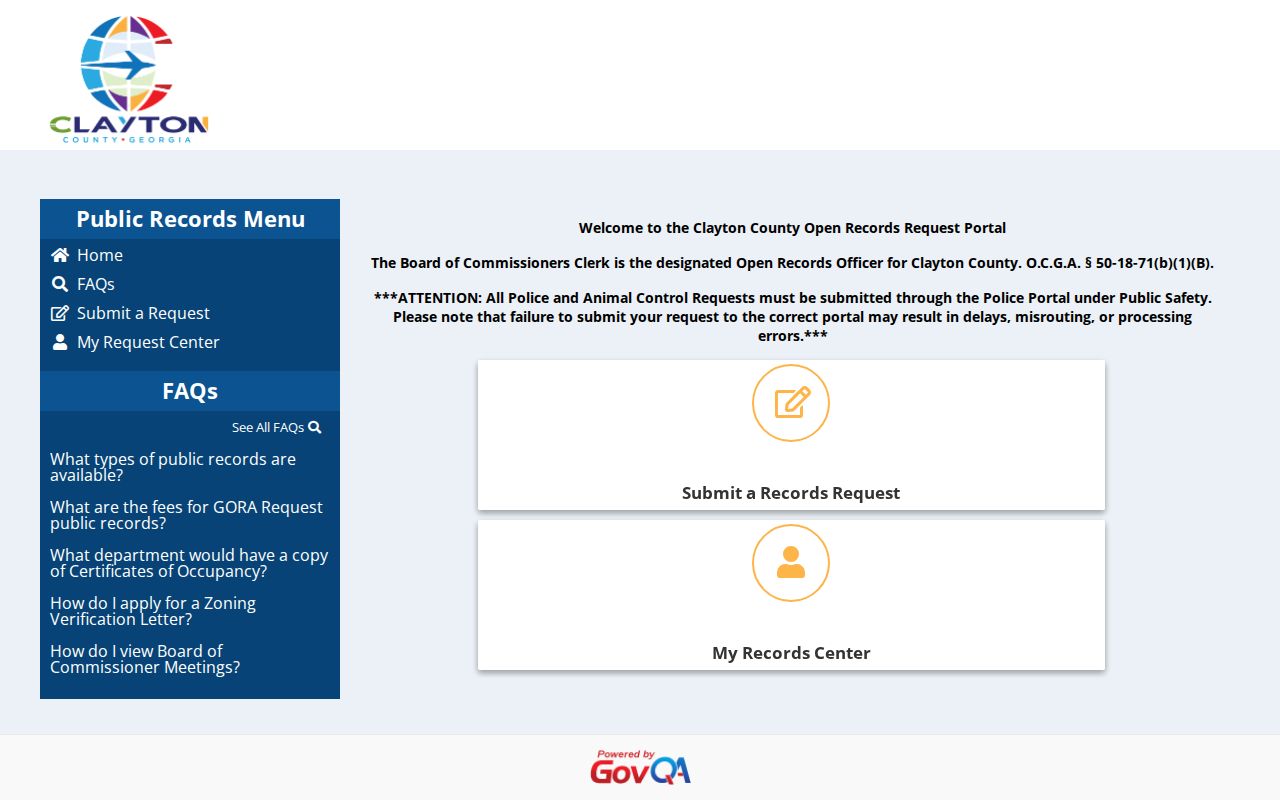
Name the jail event in any request, not just the person. Docket numbers and intake dates cut down on mistaken identity. They also hand the records unit a clean search target.
How long are booking photos kept? Georgia Archives schedules set no verified retention term for Clayton images. The 31-day window online is only a display limit. For older events, ask CCSO directly whether the booking sheet or photo is still in agency custody, moved under an adopted schedule, or lawfully destroyed. A restriction or sealing order shapes public access. It cannot wipe out copies held elsewhere.
Georgia Mugshot Law and Removal
Georgia opens most government records wide. The Open Records Act, found at O.C.G.A. §§ 50-18-70 through 50-18-77, sets the ground rules for who can see what. Still, access has limits. Exemptions, redaction duties, reasonable copying costs, and records-management rules all shape the final answer, and the right custodian plus the purpose of a booking-photo request can tip the outcome either way.
Two more statutes govern booking photos specifically. Under O.C.G.A. § 35-1-19, law-enforcement release can be restricted when an online publisher plans to link display of a mugshot to a charge for taking it down, correcting it, or halting publication, though statutory exceptions apply. Then there is O.C.G.A. § 10-1-393.5, which labels certain removal-fee practices unfair or deceptive and offers a free written removal path for qualifying documented outcomes. Neither law guarantees an image vanishes from every corner of the internet.
Booking rows are not case files. For filings, pleas, outcomes, and sealing orders, the court docket is the source that tracks them.
Georgia's main criminal-history remedy goes by the name record restriction. It is governed by O.C.G.A. § 35-3-37. Your path depends on the arrest date, the disposition, and any exceptions in play. Public court records may need a separate motion to seal. The arresting agency, the prosecutor, the clerk, or a defense attorney can pin down the route for a specific case.
For a lawful removal sequence:
- Confirm the disposition through the Clayton court system and obtain the documentation required for the applicable process.
- Send each publisher its own free documented correction or removal request. Mugshots.com's published Record Maintenance policy says it accepts qualifying documentation and can take up to 10 business days.
- After a source page changes or is removed, use Google's Refresh Outdated Content tool for stale search results.
- Do not pay an intermediary that promises universal internet deletion. A source record, a publisher copy, and a search result are separate layers.
Not everything is public. Juvenile files, sealed records, victim and witness material, medical information, security details, and active-investigation content can all be withheld or redacted. A city citation may never generate a county jail record at all. So a no-result search proves nothing about whether an event happened.
Find Clayton County Busted Mugshots
What you can find depends on where a person sits in the custody process. Want to know if someone is locked up in Clayton County Jail right now? Use the active-name search. Want the newest arrivals? That is the 48-hour docket. The 14-day and 31-day books reach further back and can still list people who already walked out. None of the public views include a photo, so a CCSO request is the official route to a booking image. If the person moved into state custody after sentencing, the Georgia Department of Corrections is the locator that matters.
- Use the official Clayton County inmate search gateway with a last name. Add a first initial or first name only after checking the broad result.
- Open the 48 Hour Docket Book for a just-booked county admission. Review intake, status, charge, bond, and agency fields, and remember that no photo is displayed.
- Expand to the 14 Day or 31 Day Docket Book when the person may have been released or the admission is older.
- Use the county criminal case gateway for filings and disposition. Search State, Magistrate, and Superior courts when the correct track is unclear.
- Use GDC only when the person is in Georgia state-corrections custody. Use BOP or ICE only when the facts point to federal or immigration custody.
- Request the booking sheet or photo from the proper custodian when the public interface does not provide it.
Start with the official record path. Do not trust any unofficial aggregator first. A news item or third-party listing may surface a name. The county docket is what actually confirms a booking event. The court record carries the legal story from there.
Where Clayton County Busted Mugshots Appear
Clayton County has no single photo feed. Each official channel answers a different question. The county roster and docket are rich in detail, yet both are text-only. The table below leads with those sources, then covers the thin secondary landscape. Keep one rule in mind: a page that names someone does not replace checking custody status or the court record yourself.
| Channel | Photo? | Status and access |
|---|---|---|
| Clayton Sheriff's active search | No photo in current view | Official current county-jail custody search by name. |
| 48-hour, 14-day, and 31-day dockets | No photo in list or detail | Official booking-date windows for recent admissions, including some released people. |
| CCSO records request | Existing image may be requested | Ask the confirmed Sheriff's custodian for the booking sheet and associated photograph. |
| Clayton criminal case search | Not a mugshot source | Official State, Magistrate, and Superior court trail after booking. |
| Georgia DOC offender search | Often shown when available | Official state-corrections profiles, not ordinary county-jail arrests. |
| Local news | May use supplied or file images | Clayton News, WSB-TV, AJC, and FOX 5 publish episodic reporting, not a complete roster. |
| Mugshots.com Clayton branch | Historical image/record pages | Unofficial county aggregation. Coverage and freshness are not guaranteed. |
| Other named aggregator routes | Not verified here | Busted Newspaper, RecentlyBooked's Clayton route, Arrests.org, and Mugshots.zone were absent, inaccessible, or unverified during research. Do not treat a guessed URL as live coverage. |
The live Clayton branch of Mugshots.com is a historical secondary source. It does not prove anyone is in custody today. Its published Record Maintenance policy spells out a free removal path when a qualifying disposition or restriction backs the request. No paid removal service belongs anywhere in the official record path.
County arrest news coverage has its own page here. A story can point you toward a name or an agency. The docket and the court file still carry the verification.
The Mugshots.com Clayton aggregation landing page appears below purely to document that secondary landscape. Treat it as neither a gallery nor an official release list.
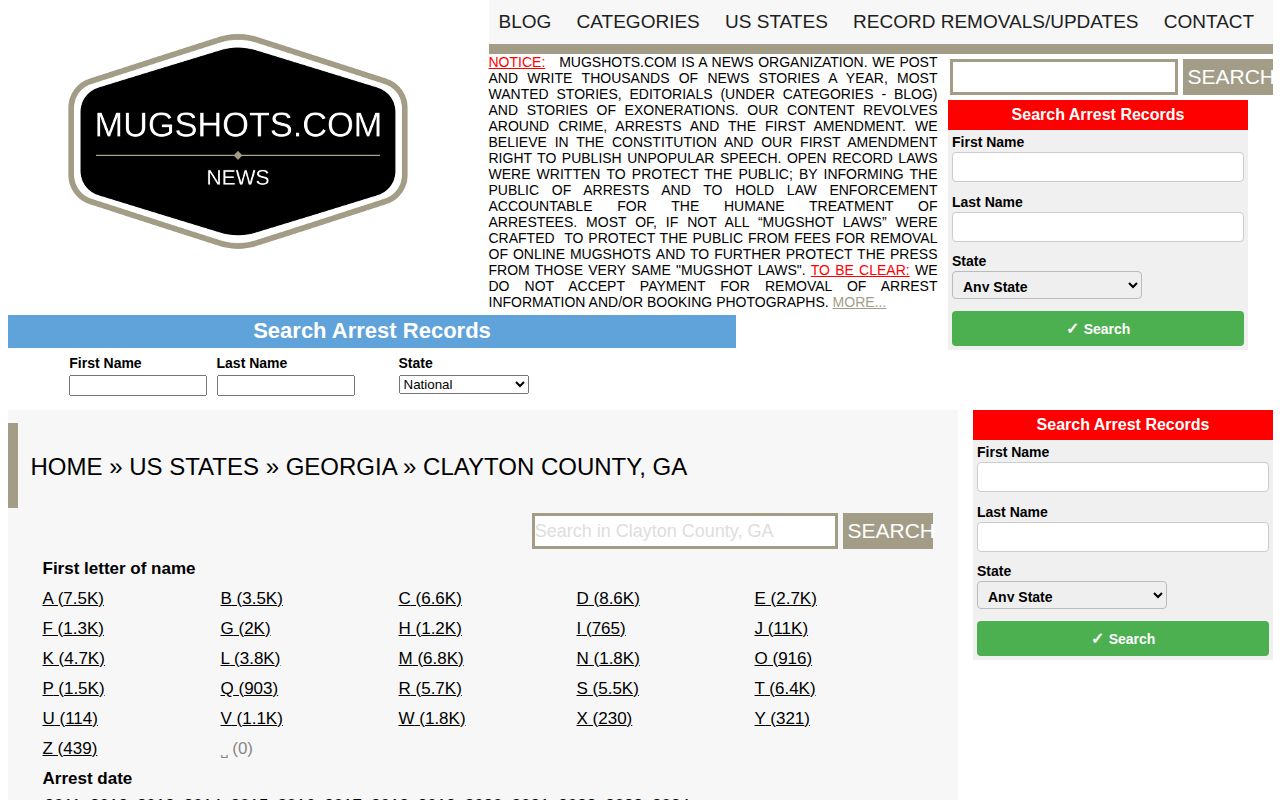
The landing view shows exactly why third-party pages carry an unofficial and stale-data warning. A copied record can linger long after release. It can also sit unchanged after a court has acted.
Clayton County Jail Roster Search
The official Clayton County Inmate Information Search is a working, legacy-style gateway. Type a last name into the Name field. A first initial or full first name narrows the match. The page states that name results cover active inmates only, so it fails as a historical index once someone is released.
One result row can hold several charge lines. Check the intake event, age, arresting agency, and LE number before assuming two entries match the same person. Bond areas may show an amount, "No Amount Set," holds, property conditions, cash conditions, or fees. Since amounts and added fees can shift, the jail or an attorney must confirm any current release condition.
| Search choice | What it covers |
|---|---|
| Last name | Required name field for the active-inmate search. |
| First initial or first name | Optional refinement. Start broad when spelling or name form is uncertain. |
| Active name result | Present Clayton County Jail custody, not every city arrest or released booking. |
| Docket detail | LE number, agency, descriptors, charge data, and bond detail. No current photo field appeared. |
- Begin at the official gateway rather than an old bookmarked host or port link.
- Enter a last name and compare the returned age, agency, intake, and identifiers.
- Open the docket detail to review charge and bond fields.
- If the person is not active, try the 14-day or 31-day booking book.
- If the needed image is absent, request the existing photograph from CCSO instead of copying one from an aggregator.
Why does the roster show no mugshot? Neither the list view nor the detail HTML carries a booking-photo field. That is a limit of the interface. It is not proof no intake image exists. No CCSO-branded jail app was verified either. Click Clayton takes non-emergency service requests and is not an inmate or mugshot tool.
The screen below shows the official gateway and its search choices. The system publishes no exact refresh interval, so call it active and rolling rather than instant.
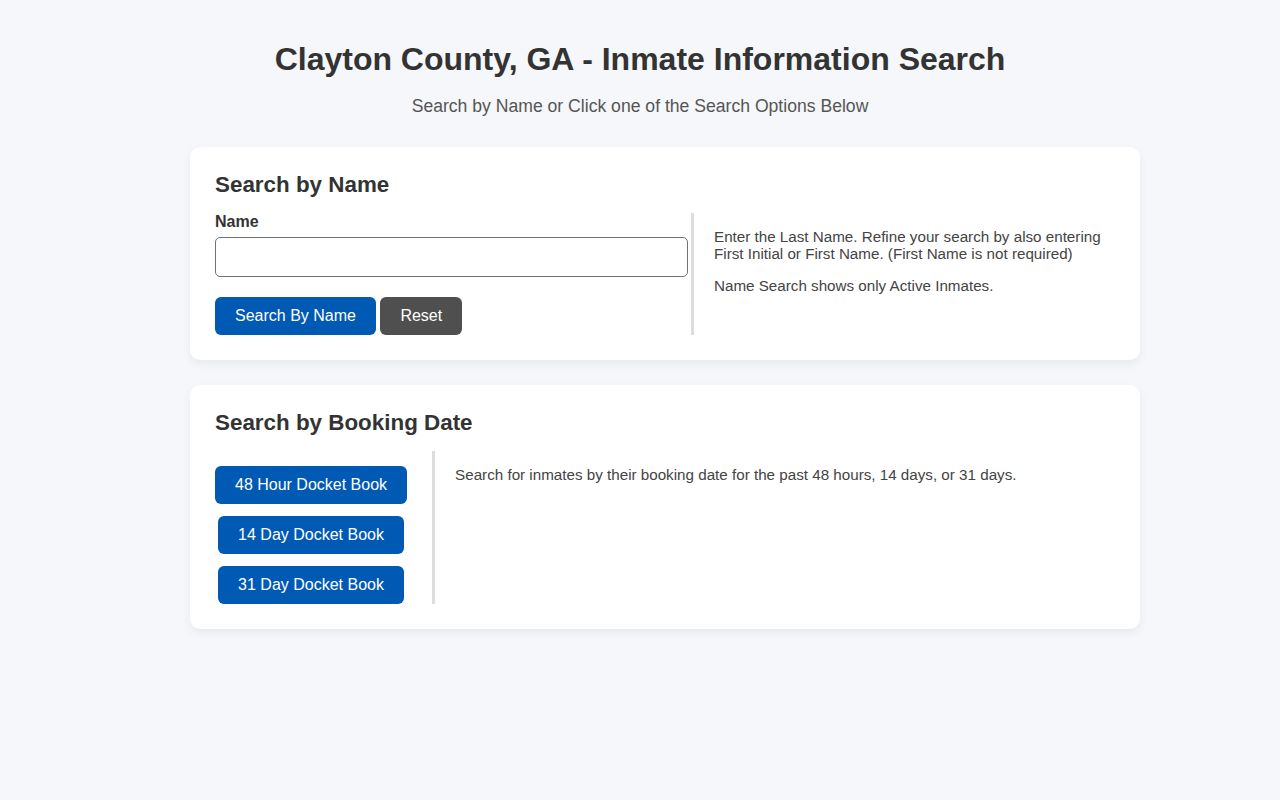
If a deep link dies, fall back to the gateway itself. One older county utility page still lists stale host and CPU8 links. Skip those; they are not the current path.
Clayton County Busted Booking Windows
Clayton's booking feeds are three rolling windows onto the same official docket system. The 48 Hour Docket Book is the closest thing to a recent-bookings feed. The 14 Day view catches people who left active name results after an early release. The 31 Day view stretches the longest. It is not a permanent archive or a full arrest history.
| Window | Best question and official link |
|---|---|
| 48 hours | Who entered the county jail most recently? Review intake and status, then open the docket detail. |
| 14 days | Was someone booked within about two weeks? A released person may still appear. |
| 31 days | Was the admission within about a month? Older events need a records request and court search. |
Each feed gives you the basics. You get docket number, intake date and time, release date and time or an in-jail marker, name, age, charge as entered, and bond. The detail view adds more. It shows LE number, arresting agency, physical descriptors, names of record, numbered charges, and bond details. No booking photo appears in any of the three feeds. A final disposition does not either.
The 48-hour screen below is the useful near-term view. Just don't call it real-time. The agency publishes no minute-by-minute schedule.
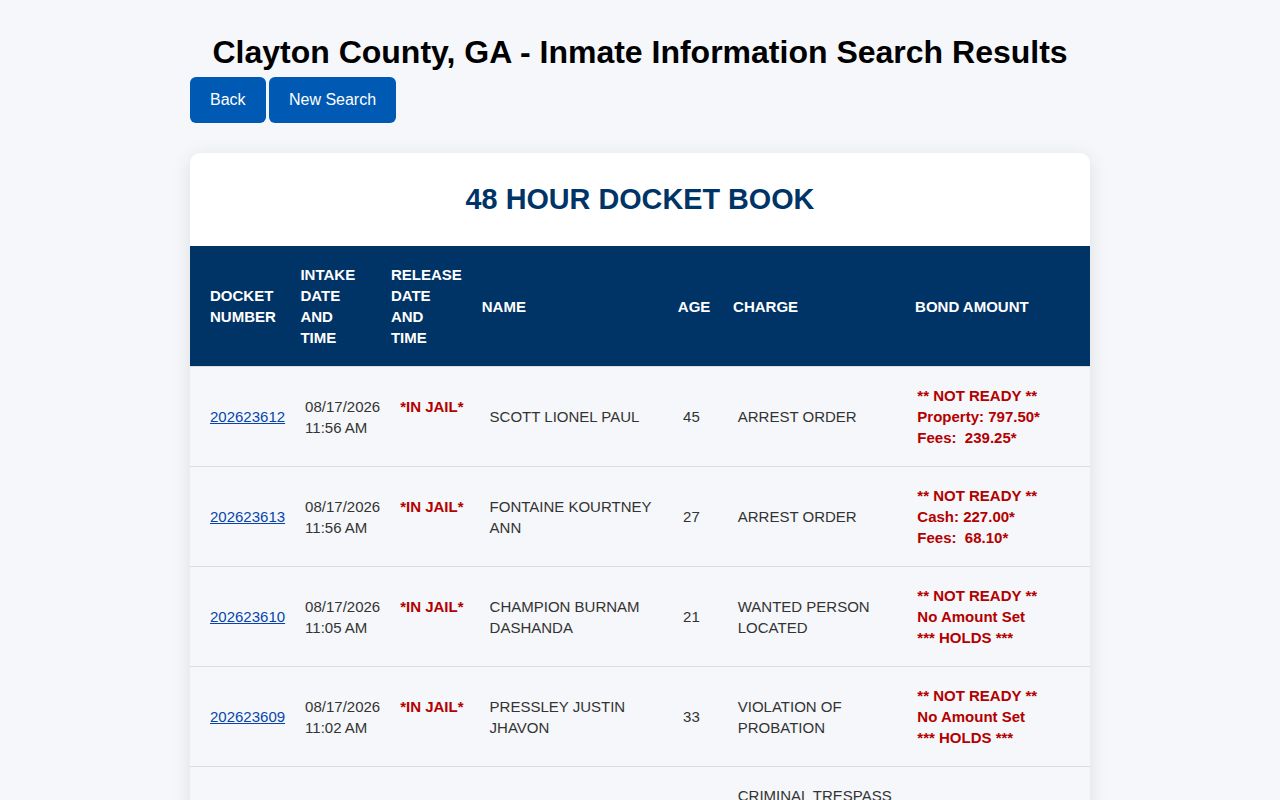
Reach for the 14-day view when the current roster has dropped a released person. Its wider window bridges the gap between present custody and a formal records request.
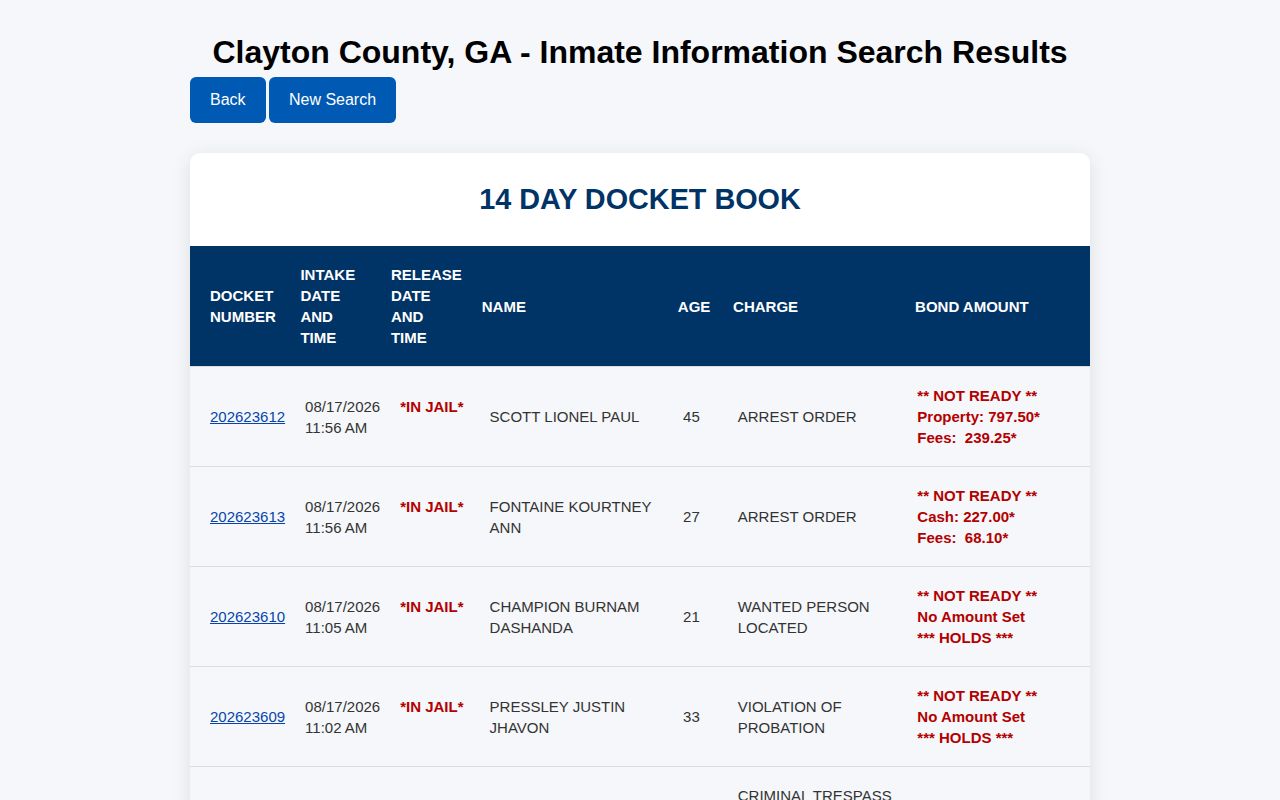
The 31-day view offers the longest verified online lookback. Once someone passes beyond it, that alone proves nothing about deletion, restriction, or destruction.
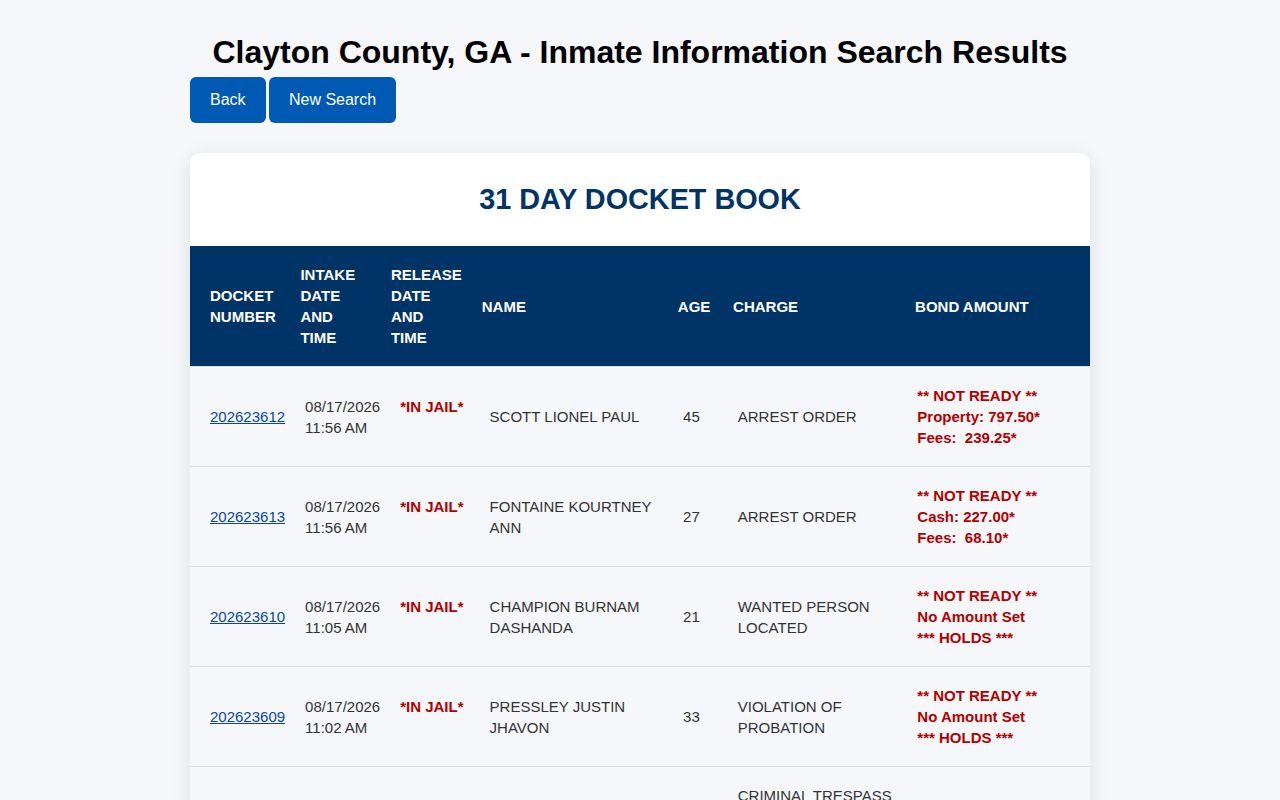
No separate daily sheriff blotter or downloadable arrest archive was verified. If a feed link fails, return to the live gateway, confirm the date, and then ask CCSO for the older booking record.
Georgia DOC Offender Photos
The Georgia Department of Corrections runs its own offender search for adults in state custody. It is not the Clayton County Jail roster. A local arrest shows up there only after a qualifying state sentence moves the person into that system. Most fresh Clayton bookings never appear in it.
Search with a name, GDC ID, case number, or age. If a narrow name search comes up empty, GDC suggests typing the first four letters of a last name and browsing all matches. Photos load on their own when they exist. Many are simply missing. A blank image says nothing about the county booking itself. State corrections does list two Clayton facilities: the Correctional Institution in Lovejoy and the Transitional Center in Forest Park. Neither works as an alternate county booking feed.
For a photo the system lacks, there is the GDC Open Records Request route. It promises a first response within three business days. Nonmedical copies cost $0.10, and search or redaction labor is billed at the lowest-qualified employee rate. The statewide search guidance shown here fits the sentenced-custody stage, after the county jail trail ends.
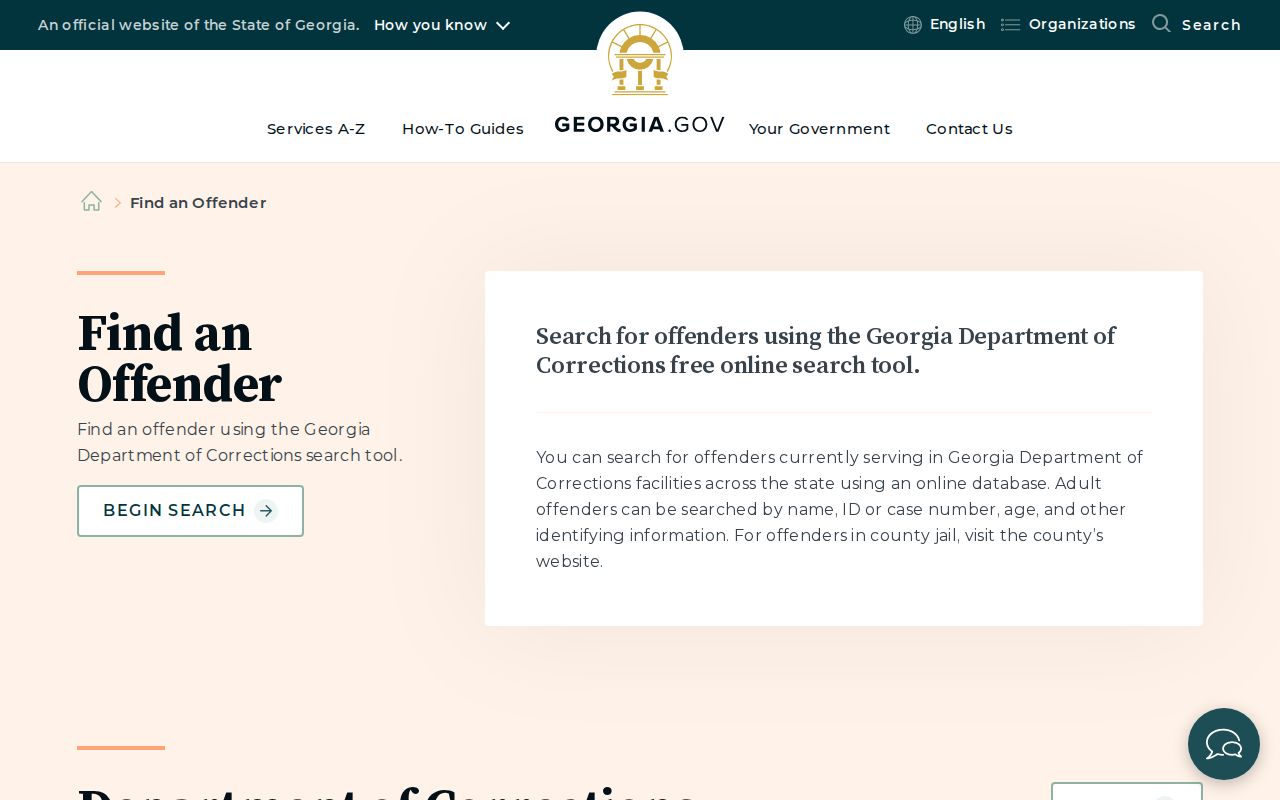
Start with the county docket for any new Clayton arrest. Turn to GDC only once the record points to actual state custody.
Clayton Custody Alert Systems
Alert services answer a different question than a mugshot search does. Georgia VINE sends statewide custody-event notices by phone, web, or app when the record and facility take part. It flags events for registered users. It shows no booking photos and no full county roster.
The GDC V.I.P. program covers state corrections and parole, not ordinary Clayton County Jail bookings. Use it only when the person and custody stage fit that system. Neither service replaces the Sheriff's active search, the rolling booking books, a records request, or the court gateway. The official Georgia VINE notice and GDC V.I.P. information spell out their separate scopes.
Clayton County Busted and Released
Custody status drives the choice of source. The public search does not trail one person through every stage. So match names with dates, agencies, and identifiers. Do that before treating two records as connected.
| Custody stage | Where to look | What it can show |
|---|---|---|
| Just booked | 48 Hour Docket Book | Recent intake, charge as entered, bond, release status, and jail identifiers. No public photo field. |
| In Clayton County Jail | Active name search | Present county-jail custody. The name result is not a full history. |
| Released from county jail | 14-day or 31-day book, records request, court search | Recent booking may remain visible by date. Release does not mean dismissal. |
| Sentenced to Georgia custody | GDC Find an Offender | State-corrections record and a photo when available. Not a county booking list. |
| Federal custody | BOP locator, ICE locator, or USMS selected notices | Federal or immigration custody scope. Public BOP and ICE locators have no photo field. |
Someone can vanish from the active roster while the booking record still sits in the rolling date books. The public-web cutoff is not a retention term. For an older event, turn to a CCSO records request plus a court search.
Clayton County Court Dispositions
Clayton's criminal case gateway lets you search by name or case number across three courts: State, Magistrate, and Superior. Unsure which one holds the file? Start with all of them at once. Magistrate Court handles warrants and early hearings. State Court takes qualifying misdemeanors. Superior Court handles felonies along with the other matters in its power. City citations and ordinance cases usually run through a municipal court instead.
Before searching, copy details straight from the jail record. Grab the full name, docket or LE number, arresting agency, intake date, and booked charge. Matching those details matters. A common name can tie two different people to one result if you skip that step. Once you find the case, open the docket and look for the latest signed order or judgment. A news story, a roster status, or a bond entry will not tell you how the case ended.
One warning comes from the gateway itself. Public results leave out Juvenile Court, Probate Court, adoptions, protective orders, sealed cases, pre-JIS cases, matters outside Clayton County, and other restricted records. So an empty result may just mean the search cannot reach that file. The court search gateway shown below is the right place to begin the county court trail.
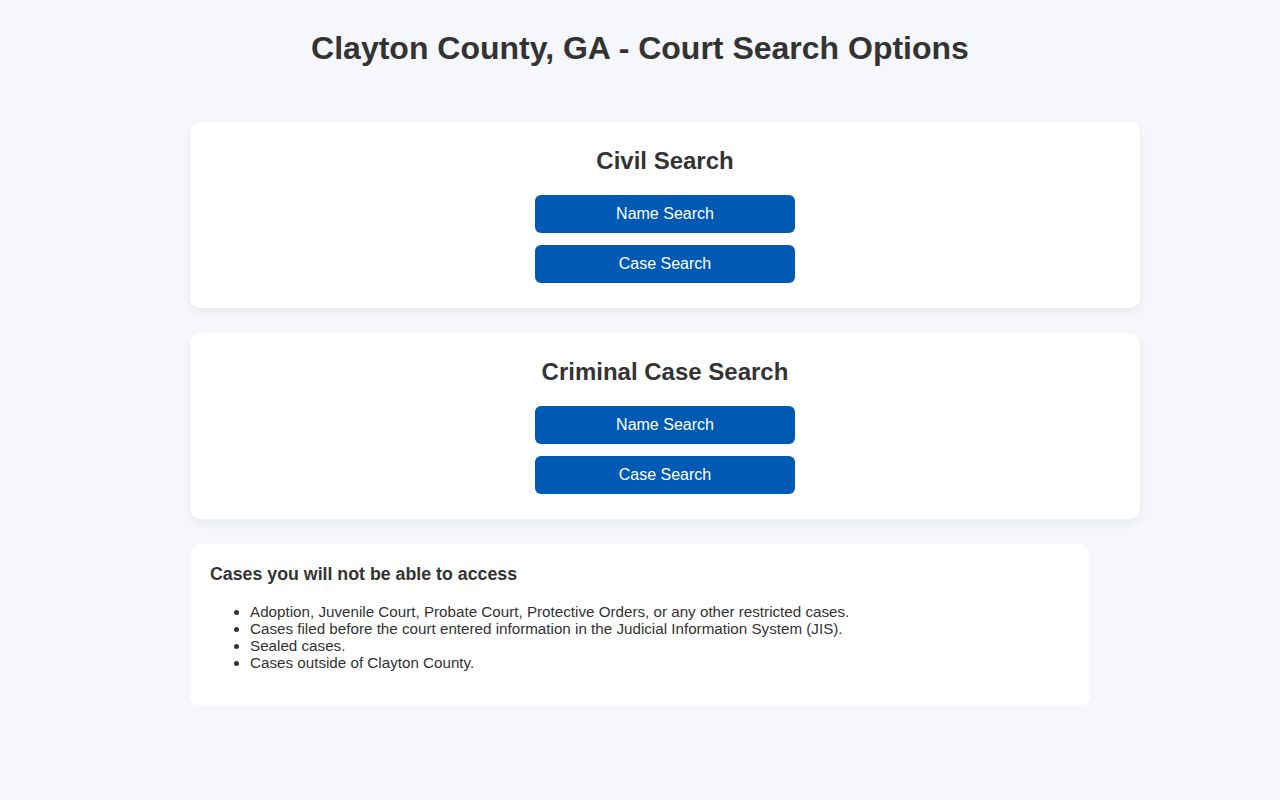
Intake charges often change. The court docket shows the final outcome, so read it before repeating what the booking sheet said.
Clayton County Busted by City
Forest Park, Riverdale, and Jonesboro each run their own police departments. None offers a verified official daily arrest log. Each city keeps a separate records path. When city police bring someone into Clayton County Jail, the county roster and booking windows pick up that event. Still, the trail is not automatic. A citation, municipal process, transfer delay, or medical clearance can each keep a police contact from ever creating a county row.
- Forest Park Busted Mugshots covers the Forest Park Police Department, its JustFOIA records route, and the county booking path.
- Riverdale Busted Mugshots covers the Riverdale Police Department's separate police-record request form and county docket fallback.
- Jonesboro Busted Mugshots covers the county-seat police and municipal court routes alongside the county jail search.
The city pages keep three things apart: the PD report, the Sheriff's booking sheet, and any booking image that exists. That separation tells you which office actually holds the record you want, so route your request there rather than guessing.
Clayton Jail Release Context
A 2025 federal complaint drawing on CCSO data counted 23,380 total jail releases in 2024, with 13,078 of those people in the category described in the filing. The numbers sketch a fast-moving system. Median stay: two days. About 30.4% of releases came within 24 hours, and another 32.7% fell between one and three days. Treat these as litigation-file throughput figures from CCSO data, not a daily census or a crime rate.
Those release figures explain a common frustration. A fresh booking can drop off the active roster fast while still sitting in a 14-day or 31-day book. There is no photo-posting schedule to rely on. The agency publishes no exact refresh interval, so work the graduated windows and confirm the custody stage yourself.
Clayton Records and Archives
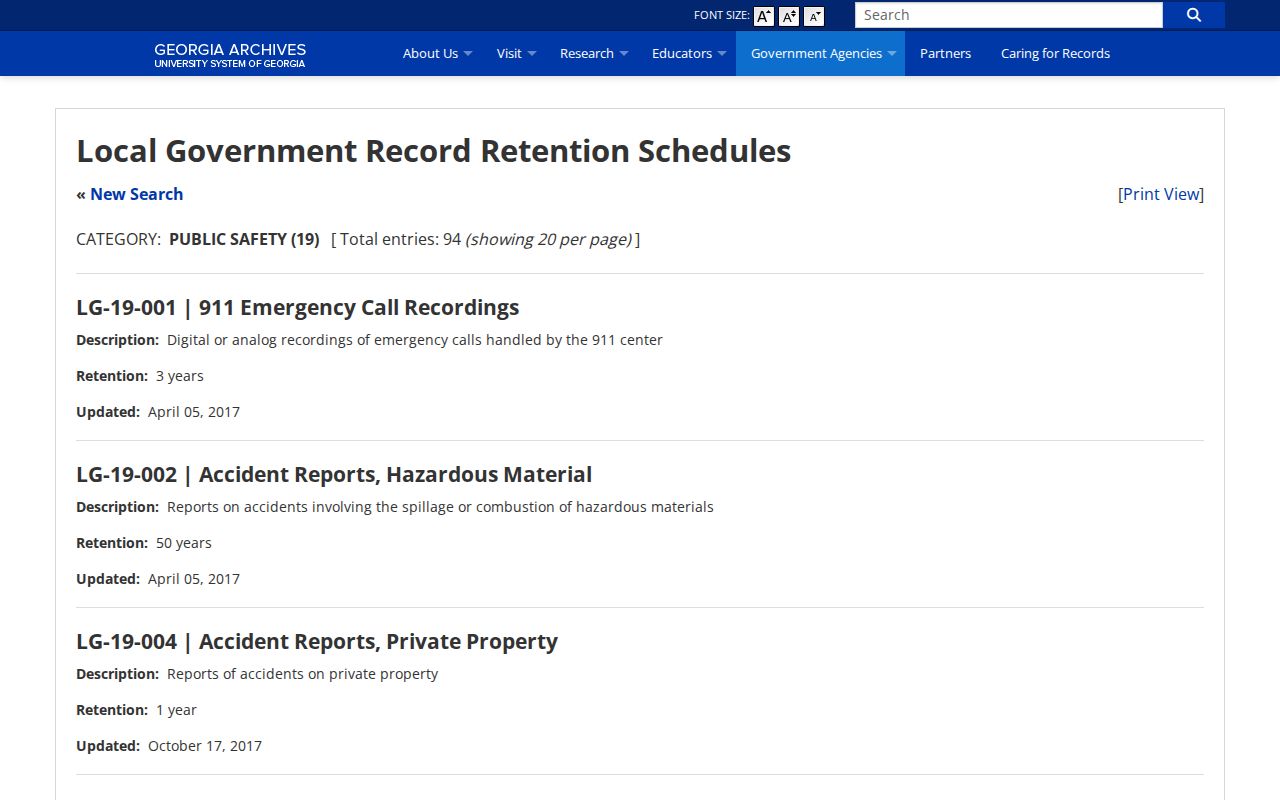
How long does a Clayton booking record last? Three different questions get tangled together here. Online visibility is one thing. Legal retention is another. Archival custody is a third. A docket entry that vanishes after 31 days tells you nothing about when a booking sheet or photo gets destroyed. Georgia's local public-safety schedule sets five-year retention for arrest and booking summary statistics, with separate periods covering executed, open, and recalled warrants. What it does not do is name a person-level Clayton booking-photo series, so no photo deadline can be drawn from it.
Chasing an older Clayton arrest? Go straight to the Sheriff's records custodian. Ask which schedule was adopted, whether the booking sheet and image still exist, and whether anything moved elsewhere. Never assume the county clerk or the Archives holds the file. The Georgia Archives schedule is a useful starting point for records-management questions, but it proves nothing about where a jail record ended up.
The Archives sits close by at 5800 Jonesboro Road in Morrow. Visitors can come Tuesday through Saturday, 9 a.m. to 4 p.m., with original-document pulls ending at 3:30. Finding aids, the Digital Vault, and Ask an Archivist all help with state collections. Still, being nearby does not mean the Archives has custody of a Clayton jail image.
The archive landing page below lays out the schedule and the research route. Treat it as a records-management tool, not a mugshot search.
A roster disappearance does not mean deletion. A retention schedule is not internet publication. Only the custodian, a transfer record, or a catalog can show what actually survives.